In response to recent COVID-19 concerns, we are wanting to assure our patients that we are taking the recommended precautions provided by the CDC. Please use the provided link for more information about our updated procedures. Read More

Close
×

Would you like to switch to the accessible version of this site?

Go to accessible site Close modal window

Don't need the accessible version of this site?

Hide the accessibility button Close modal window
Accessibility View Close toolbar
Yancey Eye Center

303 Harris Industrial Blvd. Suite 7

Vidalia, GA 30474 US

912-537-4400

Open mobile navigation
  • Home
  • Patient Info
    • Online Forms
    • Payment Options
  • Services
    • Contact Lens Exams
    • Eye & Vision Exams
    • Hard to Fit Contacts
    • Computer Vision
    • Sunglasses
    • Diagnosis and Treatment of Eye Disease
  • Eyeglasses
    • Frame Selection
    • Sunglasses
  • Contacts
  • About Us
    • Meet the Optometrist
    • Meet the Staff
  • Technology
  • Contact Us
  • Vision Plan
  • Community Content
    • Common Eye Conditions
      • Age-Related
      • Cognitive and Acquired
      • Vision Impairment
      • Injury & Irritation
      • Eye Lids
      • Changes in Appearance
    • Contact Lenses
    • Eye Diseases
    • Eyeglasses
      • Eyeglass Lenses
    • Eye Symptoms
    • How the Eyes Work
      • Basic Visual Skills
    • Pediatric Vision
    • Protecting Your Eyes
    • Visual Rehabilitation
    • Vision Problems
    • What is Vision Therapy
    • Vision Therapy Programs
    • We Can Help With
      • Cataracts
      • Corneal Disorders
        • Disorders
      • Glaucoma
      • Refractive Disorders
      • Adult Strabismus
      • Retinal Disorders
    • Newsletters
      • Glasses & Frames
      • Contacts
      • Tips for Healthy Eyes
      • Conditions That Affect Vision
      • Kid's Vision
      • Amazing, Interesting Eyes
      • Medical Perspectives
  • COVID-19 Information & Guidelines
  • Home >
  • Articles >
  • Newsletters >
  • Kid's Vision >
  • Teaching Kids About Pink Eye

Teaching Kids About Pink Eye

  • Created in Newsletters, Kid's Vision
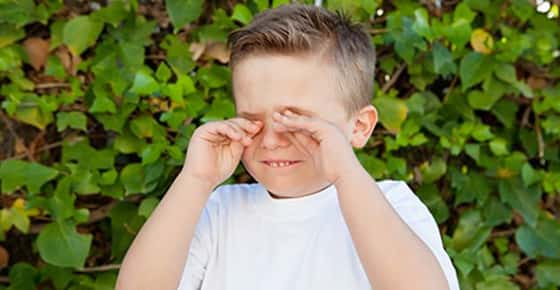
Image of a boy rubbing his eyes.

Conjunctivitis is by no means limited only to children. An infection or inflammation of the conjunctiva -- the membrane within the eyelid and protecting the white aspect of our eyes -- can occur in individuals of any age secondary to an infection, an allergic reaction or chemical irritation. Infectious conjunctivitis can be the result of a bacterial or viral infection.

In children, however, a highly contagious type of bacterial conjunctivitis can often run throughout a school or daycare facility's entire population due to the isolated subpopulation of children available as victims and habits children engage in throughout the day. According to an interview with Dr. Laura Perrin of the New Jersey Society of Optometric Physicians, children are often prohibited from attending school until they have been treated with antibacterial eye drops or ointments for at least 24 hours in an effort to help prevent the infection of an entire school.

Teaching Kids About Pink Eye

Both the viral and the bacterial form of infectious conjunctivitis can be transmitted directly by touch. Knowing this aspect of the disease's transmission as well as the frequency with which children rub their eyes -- particularly throughout a school day -- clearly indicates the ease by which the infection can spread throughout a classroom, school or daycare center. Depending upon their age and grade, children should be instructed about the following aspects of this disease:

• "Pink Eye" is the common name for the eye infection known medically as infectious conjunctivitis.

• Germs or bacteria cause most infectious conjunctivitis. Treatment requires antibacterial eye drops or eye ointment to help your body's defenses fight the infection.

• Viral or infectious conjunctivitis can be spread by touch, both direct and indirect. Teach your child never to intentionally touch another child's face or eye area. If this occurs accidentally, your child should wash his or her hands immediately or use an antibacterial gel.

• While it may be good manners to share school supplies, the practice shares germs and potential infections as well. Provide your child with his or her own supplies and provide instructions on how to combine courtesy with disease prevention.

• Emphasize regularly the importance of your child washing his or hands throughout the day.

• Teach your child the symptoms of pink eye that they may begin to experience before the infection becomes apparent, such as itchy eyes, blurry vision, feeling as if an eyelash or other foreign object is in the eye or light sensitivity. Children may not understand these common terms and they may need to be explained at their level, such as "if bright light hurts your eyes" as opposed to the term "acute photo-sensitivity."

• Teach your child the advanced symptoms of pink eye, such as matted eyelashes, pain with each eye blink and discolored sclera or whites of their eyes. Remove the child's pillowcase and any washcloths or towels used to be laundered so as not to spread the infection among family members.

• Teach your child why the medication they are prescribed must be applied on a regular basis until the entire prescription is complete.

Source:

New Jersey Society of Optometric Physicians. “Does ‘Pink Eye’ Have You Seeing Red?”

  • Common Eye Conditions
    • Age-Related
    • Cognitive and Acquired
    • Vision Impairment
    • Injury & Irritation
    • Eye Lids
    • Changes in Appearance
  • Contact Lenses
  • Eye Diseases
  • Eyeglasses
    • Eyeglass Lenses
  • Eye Symptoms
  • How the Eyes Work
    • Basic Visual Skills
  • Pediatric Vision
  • Protecting Your Eyes
  • Visual Rehabilitation
  • Vision Problems
  • What is Vision Therapy
  • Vision Therapy Programs
  • We Can Help With
    • Cataracts
    • Corneal Disorders
      • Disorders
    • Glaucoma
    • Refractive Disorders
    • Adult Strabismus
    • Retinal Disorders
  • Newsletters
    • Glasses & Frames
    • Contacts
    • Tips for Healthy Eyes
    • Conditions That Affect Vision
    • Kid's Vision
    • Amazing, Interesting Eyes
    • Medical Perspectives

Yancey Eye Center Vision Care Plan

In house vision plan offer for patients without vision insurance. Request information using the form or call us at (912)537-4400.

Error!

    Featured Links

    Click to find out more

    • Services

      We strive to provide complete care for our patients/ learn more about all the services we provide.
      Learn More
    • Request An Appointment

      We will do our best to accommodate your busy schedule. Request an appointment today!

      Schedule Now
    • Online Forms

      Our patient forms are available online so they can be completed in the convenience of your own home or office.
      View Forms

    Office Hours

    Our Regular Schedule

    Monday:

    8:00 am-12:00 pm

    1:00 pm-5:00 pm

    Tuesday:

    8:00 am-12:00 pm

    1:00 pm-5:00 pm

    Wednesday:

    8:00 am-12:00 pm

    1:00 pm-5:00 pm

    Thursday:

    8:00 am-12:00 pm

    1:00 pm-5:00 pm

    Friday:

    8:00 am-2:00 pm

    Saturday:

    Closed

    Sunday:

    Closed

    Location

    Find us on the map

    Testimonials

    Reviews From Our Satisfied Patients

    • "Yancey Eye Center is the best at what they do and make you feel right at home."
      John Doe Vidalia, GA
    • "Dr. Yancey and staff deliver the highest level of professionalism and customer care I have ever seen.We are very fortunate to have such a excellent center for our eye health care needs. Thank you and continue the great work!"
      Philip Sassos

    Featured Articles

    Read up on informative topics

    • March Newsletter: Top Signs You Need to See an Optometrist

      Do you need to make an appointment with the eye doctor? ...

      Read More
    • March Newsletter: How Dehydration Affects Your Eye Health

      Do you know how dehydration affects your eyes? ...

      Read More
    • February Newsletter: How to Prepare for an Eye Exam

      Are you ready for your eye exam? ...

      Read More
    • February Newsletter: What are Eye Floaters and When Should You Seek Treatment?

      Do you know when eye floaters need treatment? ...

      Read More
    • January Newsletter: Why You Should Not Ignore Dry Eye Symptoms

      Are your eyes dry? Find out why you shouldn't overlook your symptoms. ...

      Read More
    • January Newsletter: How the 20-20-20 Rule Can Reduce Eye Strain

      Struggling with eye strain? This simple rule can help. ...

      Read More
    • December Newsletter: The Best Contact Lenses for Dry Eyes

      Need to find more comfortable contacts for your dry eyes? Take a look at these options. ...

      Read More
    • December Newsletter: Daily Habits That Affect Your Vision

      Could your daily habits harm your eyesight? ...

      Read More
    • November Newsletter: Why It's Important to Have an Extra Pair of Eyeglasses or Contact Lenses

      Do you have an extra pair of eyeglasses or contact lenses? ...

      Read More
    • November Newsletter: The Advantages of Rimless Eyeglasses

      Are rimless eyeglasses right for you? ...

      Read More

    Newsletter Sign Up

    Error!

      • Copyright © 2026 MH Sub I, LLC dba iMatrix.
      • Admin Log In
      • Site Map