In response to recent COVID-19 concerns, we are wanting to assure our patients that we are taking the recommended precautions provided by the CDC. Please use the provided link for more information about our updated procedures. Read More

Close
×

Would you like to switch to the accessible version of this site?

Go to accessible site Close modal window

Don't need the accessible version of this site?

Hide the accessibility button Close modal window
Accessibility View Close toolbar
Yancey Eye Center

303 Harris Industrial Blvd. Suite 7

Vidalia, GA 30474 US

912-537-4400

Open mobile navigation
  • Home
  • Patient Info
    • Online Forms
    • Payment Options
  • Services
    • Contact Lens Exams
    • Eye & Vision Exams
    • Hard to Fit Contacts
    • Computer Vision
    • Sunglasses
    • Diagnosis and Treatment of Eye Disease
  • Eyeglasses
    • Frame Selection
    • Sunglasses
  • Contacts
  • About Us
    • Meet the Optometrist
    • Meet the Staff
  • Technology
  • Contact Us
  • Vision Plan
  • Community Content
    • Common Eye Conditions
      • Age-Related
      • Cognitive and Acquired
      • Vision Impairment
      • Injury & Irritation
      • Eye Lids
      • Changes in Appearance
    • Contact Lenses
    • Eye Diseases
    • Eyeglasses
      • Eyeglass Lenses
    • Eye Symptoms
    • How the Eyes Work
      • Basic Visual Skills
    • Pediatric Vision
    • Protecting Your Eyes
    • Visual Rehabilitation
    • Vision Problems
    • What is Vision Therapy
    • Vision Therapy Programs
    • We Can Help With
      • Cataracts
      • Corneal Disorders
        • Disorders
      • Glaucoma
      • Refractive Disorders
      • Adult Strabismus
      • Retinal Disorders
    • Newsletters
      • Glasses & Frames
      • Contacts
      • Tips for Healthy Eyes
      • Conditions That Affect Vision
      • Kid's Vision
      • Amazing, Interesting Eyes
      • Medical Perspectives
  • COVID-19 Information & Guidelines
  • Home >
  • Articles >
  • We Can Help With >
  • Refractive Disorders >
  • Myopia

Myopia

  • Created in We Can Help With, Refractive Disorders
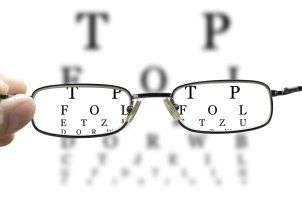
hand holding glasses to eye chart

Myopia, or nearsightedness, means that your eyes can see close objects clearly but struggle to see things in the distance. Nearly 30 percent of Americans are nearsighted.

This condition usually develops in children and teenagers, up to about the age of 20. A teacher or parent might notice a child squinting at the chalkboard or TV. Other common symptoms include headaches, frequent blinking and rubbing of the eyes and failing to notice distant objects.

Causes

If the curvature of your cornea — the clear part on the front of your eye — is too steep, you will be nearsighted. Myopia can also be caused by an eyeball that is too long, relative to the lens’ and cornea’s focusing power. Light entering your eye will not be correctly focused, causing things in the distance to look blurry.

However, what causes these defects is still under debate. Heredity and visual stress are leading contenders. If both parents are nearsighted, the child is at higher risk. Examples of visual stress include excessive reading, computer use or other tasks that demand the eyes to focus on close objects. Note: Myopia due to close work is sometimes temporary.

Eye problems can also be symptoms of other disorders, such as diabetes or a cataract developing in the eye.

Testing and Diagnosis

Eye doctors test patients’ vision by having them read letters on a Snellen chart that is placed about 20 feet away from the patient. Your doctor may also use lighted instruments to determine the focusing power of your eyes. Sometimes, eye doctors use eye drops to dilate the eyes. This temporarily prevents the eyes from changing focus, so he or she can examine them more easily.

Once your eye doctor finishes the test, he or she can determine whether you have myopia. If you suffer from myopia, you and your eye doctor will discuss possible treatment options.

Non-Surgical Treatment Options

Eyeglasses are the most commonly prescribed and least invasive method of treating myopia. Depending on how nearsighted you are, you might need to wear glasses some or all of the time. If you also have trouble seeing things close-up, your eye doctor might prescribe bifocals. These let you see both far and close objects more clearly, and are popular with patients over the age of 40.

Contact lenses can provide a wider field of vision and may let you see more clearly. However, because they are worn directly on the eye, they need extra care and cleaning. Contact lenses are not recommended for those who are squeamish about touching their eyes.

Orthokeratology, also called corneal refractive therapy, involves wearing rigid contact lenses that reshape your cornea’s curvature. This therapy changes how light enters your eyes, eventually making your eyes focus correctly. The results from orthokeratology are temporary, and patients must continue to use these specialized contact lenses to maintain results.

Surgical Treatment Options

Laser procedures such as photorefractive keratectomy and LASIK have become more prevalent over the last few decades. With laser vision correction surgery, the ophthalmologist uses laser energy to remove a small amount of corneal tissue, thus reshaping the curvature of the cornea and correcting the refractive error that is causing myopia.

Highly nearsighted people may be better suited for another type of refractive surgery, including refractive lens exchange (RLE). The ophthalmologist implants a corrective lens directly into the eye. This lens is placed either right in front of the eye’s natural lens or it replaces the natural lens entirely.

Many treatments are available to myopic patients. Call our practice today, so we can help you decide which one is best for your visual needs and lifestyle practices.

  • Common Eye Conditions
    • Age-Related
    • Cognitive and Acquired
    • Vision Impairment
    • Injury & Irritation
    • Eye Lids
    • Changes in Appearance
  • Contact Lenses
  • Eye Diseases
  • Eyeglasses
    • Eyeglass Lenses
  • Eye Symptoms
  • How the Eyes Work
    • Basic Visual Skills
  • Pediatric Vision
  • Protecting Your Eyes
  • Visual Rehabilitation
  • Vision Problems
  • What is Vision Therapy
  • Vision Therapy Programs
  • We Can Help With
    • Cataracts
    • Corneal Disorders
      • Disorders
    • Glaucoma
    • Refractive Disorders
    • Adult Strabismus
    • Retinal Disorders
  • Newsletters
    • Glasses & Frames
    • Contacts
    • Tips for Healthy Eyes
    • Conditions That Affect Vision
    • Kid's Vision
    • Amazing, Interesting Eyes
    • Medical Perspectives

Yancey Eye Center Vision Care Plan

In house vision plan offer for patients without vision insurance. Request information using the form or call us at (912)537-4400.

Error!

    Featured Links

    Click to find out more

    • Services

      We strive to provide complete care for our patients/ learn more about all the services we provide.
      Learn More
    • Request An Appointment

      We will do our best to accommodate your busy schedule. Request an appointment today!

      Schedule Now
    • Online Forms

      Our patient forms are available online so they can be completed in the convenience of your own home or office.
      View Forms

    Office Hours

    Our Regular Schedule

    Monday:

    8:00 am-12:00 pm

    1:00 pm-5:00 pm

    Tuesday:

    8:00 am-12:00 pm

    1:00 pm-5:00 pm

    Wednesday:

    8:00 am-12:00 pm

    1:00 pm-5:00 pm

    Thursday:

    8:00 am-12:00 pm

    1:00 pm-5:00 pm

    Friday:

    8:00 am-2:00 pm

    Saturday:

    Closed

    Sunday:

    Closed

    Location

    Find us on the map

    Testimonials

    Reviews From Our Satisfied Patients

    • "Yancey Eye Center is the best at what they do and make you feel right at home."
      John Doe Vidalia, GA
    • "Dr. Yancey and staff deliver the highest level of professionalism and customer care I have ever seen.We are very fortunate to have such a excellent center for our eye health care needs. Thank you and continue the great work!"
      Philip Sassos

    Featured Articles

    Read up on informative topics

    • March Newsletter: Top Signs You Need to See an Optometrist

      Do you need to make an appointment with the eye doctor? ...

      Read More
    • March Newsletter: How Dehydration Affects Your Eye Health

      Do you know how dehydration affects your eyes? ...

      Read More
    • February Newsletter: How to Prepare for an Eye Exam

      Are you ready for your eye exam? ...

      Read More
    • February Newsletter: What are Eye Floaters and When Should You Seek Treatment?

      Do you know when eye floaters need treatment? ...

      Read More
    • January Newsletter: Why You Should Not Ignore Dry Eye Symptoms

      Are your eyes dry? Find out why you shouldn't overlook your symptoms. ...

      Read More
    • January Newsletter: How the 20-20-20 Rule Can Reduce Eye Strain

      Struggling with eye strain? This simple rule can help. ...

      Read More
    • December Newsletter: The Best Contact Lenses for Dry Eyes

      Need to find more comfortable contacts for your dry eyes? Take a look at these options. ...

      Read More
    • December Newsletter: Daily Habits That Affect Your Vision

      Could your daily habits harm your eyesight? ...

      Read More
    • November Newsletter: Why It's Important to Have an Extra Pair of Eyeglasses or Contact Lenses

      Do you have an extra pair of eyeglasses or contact lenses? ...

      Read More
    • November Newsletter: The Advantages of Rimless Eyeglasses

      Are rimless eyeglasses right for you? ...

      Read More

    Newsletter Sign Up

    Error!

      • Copyright © 2026 MH Sub I, LLC dba iMatrix.
      • Admin Log In
      • Site Map